Showing posts with label Physical Excellence. Show all posts

Sunday, April 22, 2012

Introducing Puzzles to Babies (6-12 months)

Introducing puzzles to babies 

At what age can you introduce puzzles to your baby? 

 While even simple puzzles have generally been deemed as an activity for the toddler and preschooler domain, there are lots of great options nowadays that can bring the benefits of puzzles down to babies under a year old. 

When is my baby ready? What are some good things to look for to see if your baby is ready for puzzles? For starters, if your baby:
  1. Picks up small objects with one hand
  2. Puts things inside containers
  3. Manipulates objects, such as trying to open containers, cabinets, or locks
He will probably be able to handle simple puzzles. Most babies are able to do these things well before their first birthdays.

How to Introduce Puzzles to Babies

1. Get the Right Puzzles

Find some good "inset" puzzles, the kind where puzzle pieces fit inside cut-out spaces in a board.
Try and find some puzzles with as many of the following characteristics as possible:
  • Have large, easy to grasp knobs
  • Have only a few pieces, 1-3 is best to start
  • Have a little wiggle room and are easy to put in
  • Have simple shapes (circles are the easiest)
  • Have matching pictures under the pieces
A few "ok" options:


 Some of our personal favorites include this 3-piece jumbo shapes puzzle previously available from Melissa & Doug, and this set of Garanimals puzzles (which Damien is pictured playing with) from Wal-mart (available as a 3-pack in the baby section for $6). It would really be ideal to find some "perfect" starter puzzles, such as a one-piece puzzle with a circle shape, but so far I haven't been able to find any. Have you?

2. Put Puzzles in Baby's Play Area

I have had puzzles out in Damien's play area for a while. He has mostly enjoyed dumping them out, banging them together, mouthing them, and doing all of his other dozens of "scientific experiments" with them.

In the process, however, he was able to truly learn about their shape, texture, color, length, diameter, weight, thickness, curve of the edges, sound they make, balance, and many, many more characteristics babies are discovering in their play.

3. Play Clean Up

After letting baby play with the pieces, teach him to put them away.

I believe that if a baby is old enough to dump toys out, he is old enough to put them away. So as with other clean up activities, guide his hand in putting the puzzle pieces in the correct place and then putting the puzzle away on the shelf. He will get a feel for where they go and how they fit and will very quickly attempt to do this on his own during playtime.

DSC_0762 2_new

4. Scaffolding - Play Puzzles with Your Baby!

"Scaffolding" essentially means giving your baby as much help as he needs to advance to the next level of skill, but not more help than he needs.

For introducing puzzles to baby, it might first mean guiding his hand in placing the pieces in the correct spot (as in the "clean up" activity above).

The second step might mean putting the puzzle piece almost in the right spot, then guiding him, "Put the puzzle piece in" and letting him "do the rest", essentially only moving the piece a little before it falls into place.

The third step might mean giving your baby a puzzle piece, making sure it is oriented correctly (not upside down or sideways) and pointing out the correct spot while encouraging him to put the piece in.

And so the game would continue, with each time giving your baby only much help as you feel like he needs to succeed, then stepping back and watching him figure out the rest on his own.

Damien is currently somewhere in between the second and third step mentioned above. We have only recently started playing with puzzles more often, and he really seems to enjoy it. His focus while trying to put the pieces in is intense!

Puzzles can be a great addition to your baby's playtime. Always remember when playing with your baby to keep in mind the principles of teaching tiny children - specifically to keep it brief, fun, and stop before he wants to stop.

P.S. I would love to hear about your experiences of introducing puzzles to your baby or toddler, as well as any recommended beginner puzzles you have found!

"He made also ten tables, and placed them in the temple, five on the right side, and five on the left..."
2 Chronicles 4:8
Damien is 10 months, 2 weeks old

Friday, April 20, 2012

Swimming Lessons 2012 - Damien (Physical Excellence Friday)

Swim_new

Ideally, our Doman-style swimming lessons would continue year-round.

 But then reality sets in, and there is pretty much nothing that is going to motivate me to go swimming when it is 40 or 50 degrees outside, no matter how "mild" that is in comparison to some of the other winter climates in the country and world.

 So trying to be realistic, our swimming lesson season runs from about April through October, giving us a good 5 to 6 months a year, 3 to 6 days a week.

 On our first day of swimming earlier this week, it was encouraging to note that Damien took to the water like a fish (which I know is totally cliche). In fact, the first day we went swimming, I had planned to just let Hunter swim and we were going to watch. Ha. Nice try, Mom.

 Damien was so enthusiastic about the water that I couldn't keep him out of it. I ended up giving up the battle to keep him poolside, and we waded on the stairs after stripping him down to his diaper. He splashed and kicked with gusto.

  swim 2_new

So, as our swimming season began earlier this week at the first sign of warm weather (it's been in the upper 70's and 80's, finally), I would like to share with you some goals I am hoping to accomplish by the end of the "summer" (October) at which time Damien will be 16 months old.

 These goals might be lofty, or they might be underestimating him - who knows. Whatever doesn't get accomplished this summer, we will pick up next summer (or maybe even during the winter if we could ever find an indoor pool).
  • Swim 3-10 feet underwater independently
  • Float on back independently
  • Jump into water (from sitting or standing) and then swim back up to surface to adult or edge of pool
  • Swim to edge and hold on
  • Climb out of the pool from stairs
  • Dive for objects at bottom of pool (in very shallow water, body height or less)
  • Roll over in water from front to back
  • Swim and come up for breaths, either by sticking head out of water or flipping on back to breath/rest, as in here
  • Water safety (do not enter pool without adult, do not enter after swim time is over, careful jumping, more)
Damien's current skill level? He splashes, kicks, eagerly puts his face in the water, and (sometimes) holds his breath underwater momentarily. He used to do well floating on his back in the bathtub, but currently is not too fond of it. I suppose he is out of practice.

Hunter's goals (age 7) for the summer are a bit more extensive and deserve a post of their own (next week). Wish us luck!  

"And he shall spread forth his hands in the midst of them, as he that swimmeth spreadeth forth his hands to swim..." Isaiah 25:11
Damien is 10 months, 2 weeks old

Saturday, January 14, 2012

Doman Running Program Update (Physical Excellence Friday)


I know it's cliche.

Treadmills in January.

But whatever the matter of cultural trends may be, we are back at running this week. However, this time in the slightly-less-than-ideal location of our garage.

I know, I know. The Doman running program is ideally conducted outside. More interesting, fresh air, the works.

But lately the I have had to give up the "all or nothing" mindset and settle for "pretty good".

See, I have been working a lot lately. Eighteen hours a day, to be exact.

And when I have a house full of daycare kids, all day, every day, the idea of going out for a run is a little bit more trouble than it should be. And we just simply haven't been doing it, the majority of the time.

But we did a little rearranging in the garage this past weekend, plugged in the nine-year-old treadmill that someone gave us recently, and ran.

We are starting small. Easy. This is what it looks like right now:

l I run first (for 20 minutes) while he watches and does other exercises (aka plays around)  
l He then runs. Two minutes of walking (3 miles per hour), two minutes of running (5 miles per hour), repeat (for 20 minutes). 
l At this rate he gets about 2.7 miles in within twenty minutes.  
l I monitor him very closely. Like within arms length. Kids + treadmills can invariably spell disaster, so this is something to be careful about. As you can see he also has the emergency stop pull-string on, which shuts down the whole machine the moment anything goes wrong (and also the moment anything doesn't go wrong - it's pretty sensitive).  
l We have fun with it. He loves "working out", especially since it's something dad does. He also is pretty keen on getting to use adult equipment.

I am going to go ahead and make a 10-mile nonstop goal for the end of the year, for both Hunter and I. We will see how it goes.


Physical Excellence Friday
"When thou goest, thy steps shall not be straitened; and when thou runnest, thou shalt not stumble." 
Proverbs 4:12
Hunter is 6 years, 9 months old 


Tuesday, January 3, 2012

Seven Month Old Developmental Check-In (Stage III, Midbrain and Subcortical Areas)

Damien, the day he turned seven months old

Early last June, sitting in a hospital bed holding my tiny newborn, all wrinkled, blotchy-skinned, and helpless, it was hard to fathom that in just a little over 200 days he would be creeping [crawling], standing, "talking", understanding, and charming at the level he is now.

Seven months passes by in the blink of an eye.

Seven months is also another benchmark age on the Developmental Profile for the average age for babies to achieve stage III brain function (using the midbrain and subcortical areas).

In speaking of the profile, the IAHP says

"The time schedule is highly variable and depends, not upon genetic factors, but rather upon the frequency, intensity and duration of the stimuli provided to the brain by the child's environment, which is notably and most often his family."

The idea is that the brain grows by use, not by some biological alarm clock. Opportunity, frequency, encouragement, and to a lesser decree, personality will determine development. Our goal is, of course, to give our baby as much of these things as possible and do all we can to help him, not hinder him.

Damien, 5 months, pauses his creeping adventures for a smile

1. Stage III Mobility: Creeping on hands and knees, culminating in cross pattern creeping

Age achieved: 5 months, 2 weeks old

Description: "Creeping" is what most of us know as "crawling" - that cute little hands and knees movement that typifies the picture of babyhood. "Cross pattern creeping" refers to the cross pattern exhibited when a baby uses his opposite extremities simultaneously to move while on his hands and knees - right arm and left leg go forward, then left arm and right leg go forward.

Damien achieved the official "cross pattern creeping" at five months old. He has been "crawling" in other formations - more or less scooting, hopping, lunging, twisting, and rolling - since four months. He has had movement on his stomach (pushing his legs off the ground and propelling himself forward) since birth.

His most current interest is pulling himself to standing, which he does essentially all day, every day, creeping around the house finding different pieces of furniture that can act as a support frame for his vertical position.

Damien, at four months, babbling on

2. Stage III Language: Creation of meaningful sounds

Age achieved: 1-2 months

Description: "Creation of meaningful sounds" is when the baby essentially begins to make noises, beyond a basic cry, that have meaning attached to them. He begins to be able to communicate not only his needs, but his wants, moods, feelings, and preferences. These are not necessarily first English words, but words for him nonetheless.

Damien began creating meaningful sound at about 1-2 months old. He began to coo when he was happy, "yell" when he wanted attention, and whine when he was tired.

At four months, Damien said his first English word - "dada". He still attaches meaning to that word and says it when he sees pictures of his dad. His second English word, "more" (which comes out more like "muh" or "mah") began the day he turned seven months old. Ever since then, he creeps up to me and says "muh" when he wants food, or while we are eating and he wants another bite. (So he has achieved stage IV language development, "Two words of speech used spontaneously and meaningfully", an average 12 month milestone).

Damien, at six months, practicing using the prehensile grasp with small objects

3. Stage III Manual: Prehensile grasp

Age achieved: 3 months

Description: The "prehensile grasp" is when a baby is able to voluntarily pick up objects using his whole hand. The four fingers and palm are mainly used, while the thumb is usually not.

Damien achieved the prehensile grasp at around at the end of his third month. The first object that he was able to easily grab and pick up were some of Hunter's nerf gun bullets. He is now working on the pincer grasp (picking up objects with thumb and forefinger) and has nearly mastered it (an average 12 month milestone).

Damien, at two months, had grown tired of his detail board and was looking around the room for new things

4. Stage III Visual Competence: Appreciation of detail within a configuration

Age achieved: 1.5 months old

Description: At birth, babies can see only light and dark. Soon after, babies begin to see outlines. The next step is being able to see "detail within a configuration", for example the details of mother's face within the outline of her head.

Damien achieved this stage of development at approximately 4-5 weeks of age. He began to smile in response to facial expressions (without sound). He began to study detail on his daddy's camouflage uniform, or the patterns on his bouncy seat. By two months, he was studying details from across the room.

By 5-6 months, he had achieved the next stage (level IV) of development: depth perception. At seven months now his depth perception is quite good - he creeps quickly and easily without running into things much anymore, and reaches well with good accuracy.

Damien, seven months, quite happy with himself that he is no longer afraid of the vacuum

5. Stage III Auditory Competence: Appreciation of meaningful sounds

Age achieved: 2 months

Description: Baby listens to many sounds in his environment from birth, and will soon begin to understand their meaning. For example, the bathtub water running, the door opening, and mother's voice. In family members' voices, he begins to understand the tone of voice and their meanings.

Damien began to be comforted by a soothing voice at around two months old. He started laughing at silliness, and being scared by upset voices. He was deathly afraid of the vacuum for a while, now he seems to have proudly conquered his fear.

Between one and four months, he also achieve the next stage (level IV) of development: "Understanding of two words of speech". At four weeks he began to understand the meaning of the word "nurse". Other words soon followed, including "potty" (and other words associated with it) and "up". 

Damien at two months, laughing with a tickle

6. Stage III Tactile Competence: Appreciation of gnostic sensation

Age achieved: 2 months

Description: "Gnostic" comes from the Greek root word for knowledge, "gnosis". Gnostic sensation means, literally, "knowing sensation". At birth babies cannot feel very well - they may not respond consistently to pain, hot, or cold. Soon they begin to respond to these more intense sensations quickly and instantly. The next stage is to be able to respond to more variances in sensation and be able to appreciate them - for example, the subtleties of cool and warm, the peaceful calm of a soothing massage, or the humor of a boisterous tickle.

Damien achieved this stage at about 2 months old. He began to respond to tickles, enjoy his infant massages, and notice the differences in textures and what made him comfortable or uncomfortable. At four months, he achieved stage IV, "Tactile understanding of the third dimension in objects which appear to be flat". This is when he started to notice small things (like specks on the floor), or things that clearly looked flat (like a piece of paper) and started feeling for them and trying to grab them.


Summary

So in summary, this is what my notes on Damien's little Developmental Profile look like (in the back of my How Smart is Your Baby book) for him at seven months, one day old:

Motor:

 Sensory:

He is still perfecting his stage IV (green) areas, but overall is doing very well. Environment really does make such a huge difference!

Thank you for your comments!


Damien is 7 months, 0 week old

Monday, December 19, 2011

Monday, December 12, 2011

Inspirational Babies


Babies.

Never content to stay at their current level of skill.

Always, always, always learning something new.

They're so inspiring, aren't they?


Damien is 6 months, 1 week old

Saturday, August 20, 2011

Baby Mobility Development: Moving Around on Back


Damien moves a lot.

He scoots down his track on his tummy, but also, especially lately (over the past week or two) has been getting around on his back.

He likes to kick a lot when he is on his back (especially kicking me to get my attention) but sometimes he actually lifts his bottom off of the floor, or pushes off of things to do sort of a "backward scoot" in the supine position.

Hence, putting him on his back to limit his mobility (such as when I don't want him to go anywhere, like for diaper changes) is not exactly all that effective anymore.

Damien is 2 months, 2 weeks old [11 weeks]

Thursday, August 18, 2011

Mobility Development: Up on Knees


Damien's most recent development: Getting up on his knees.

I must admit that, in all honesty it is quite humorous to see his little booty sticking up in the air as he scoots (crawls) down his track.


Damien is 2 months, 2 weeks old (10 weeks)
Monday, July 25, 2011

Damien Crawling at 7 Weeks


I haven't posted a video of Damien on his crawling track since, oh, he was less than a week old.

He has made a lot of progress since those first reflexive movements. 

Since about, oh, five or six weeks old has been really getting the hang of this mobility thing and digging his little feet into the floor intentionally and really getting places.

Another milestone? Less fussing. Which is great. He really seems to be enjoying his mobility.

Damien is 1 month, 2 weeks old (7 weeks)

Monday, June 6, 2011

Damien Crawling at Four Days Old


One thing that fascinates me is the little-know fact that newborn humans are actually born with the ability to crawl.

We put Damien on his infant crawling track for the first time today, at four days old, as his circumcision is healed now.

In this video, he goes from about halfway down the track to almost to the bottom - he actually started at the top and goes all the way down in this session. The track is on a slight incline, making it easier for him to move.

He has gone down the track a couple of times today. It is amazing to see his determination as he moves. He grunts, groans, and whines to build up the respiration needed to move.

When he is on his back, he just lays there, but any time I put him on his stomach, whether in the track, on the bed or floor, or even on my chest, he tries to move. And move he does.

"Make me to go in the path of thy commandments; for therein do I delight." 
Psalm 199:35
Damien is 4 days old

Saturday, March 5, 2011

Hunter's First Basket (basketball)


Hunter made his first basket today at a basketball game.

They are a few weeks into the season, and he has been wanting to get a basket at an actual game for the longest time.

He was so proud of himself.

"Blessed shall be thy basket and thy store." 
Deuteronomy 28:5
Hunter is 5 years, 11 months old

Sunday, February 13, 2011

How Smart is Your Baby Program Weekly Logs & Checklists

Weekly logs for various stages of brain development and stimulation 

Seven pages.

If only you knew what went into these seven pages.

For the past er, week or so I have devoted almost every spare moment to perfecting this little document.

This may or may not have resulted laundry that didn't get done and other menial tasks put off for another day.

I have been working on making my own, customized versions of weekly logs for the Doman motor and sensory stimulation programs as outlined in How Smart is Your Baby.

Am I the only one who ever asked why the book didn't come with these?

Oh, I know. The book has checklists. But the checklists in the book are a full page per day. And that is a full page per day for each aspect, which actually would come out to three full pages per day. Not only would that make for an unusually high paper budget, but I needed something a little more compact, at a glance, all-in-one.

So I made my own.

I am publishing these documents now as some sort of appeasement to myself for all the hours I spent on them. Don't ask me why it took so long. It just did.

And now that I am done, Hunter might have some more clean socks.

Hopefully some other people will find some benefit out of my toil. If you've got a newborn or a little baby (or are expecting one) and are planning to implement Doman's book, enjoy!
Stage I-III Doman Program Motor & Sensory Logs

If you've never read the book that these logs are meant to be a companion to, they may seem a little, er, weird. I'm certainly not going to even try to explain everything right now, but essentially the exercises on these logs were developed as a means to intentionally help your baby develop and grow, and in turn reach their milestones sooner than if it were left to chance. It is also a means of evaluating your baby's neurological health, noting any issues long before they would be otherwise apparent.

The exercises were developed after years and years of research from the IAHP on how the brain grows and why, with the original focus of helping to heal brain injuries in children. Many of these same exercises are still used today to help grow and heal the brains of brain-injured children.

I will be writing much more about the program in time come!
"And he appointed certain of the Levites to minister before the ark of the LORD, and to record..." 
1 Chronicles 16:4
Baby boy #2 is currently 25 weeks, 1 day gestation

Friday, November 19, 2010

Bike Riding (Physical Excellence Friday)


"Life is like riding a bicycle - in order to keep your balance, you must keep moving."   
-Albert Einstein
One of Hunter's favorite things.

And who can blame him?

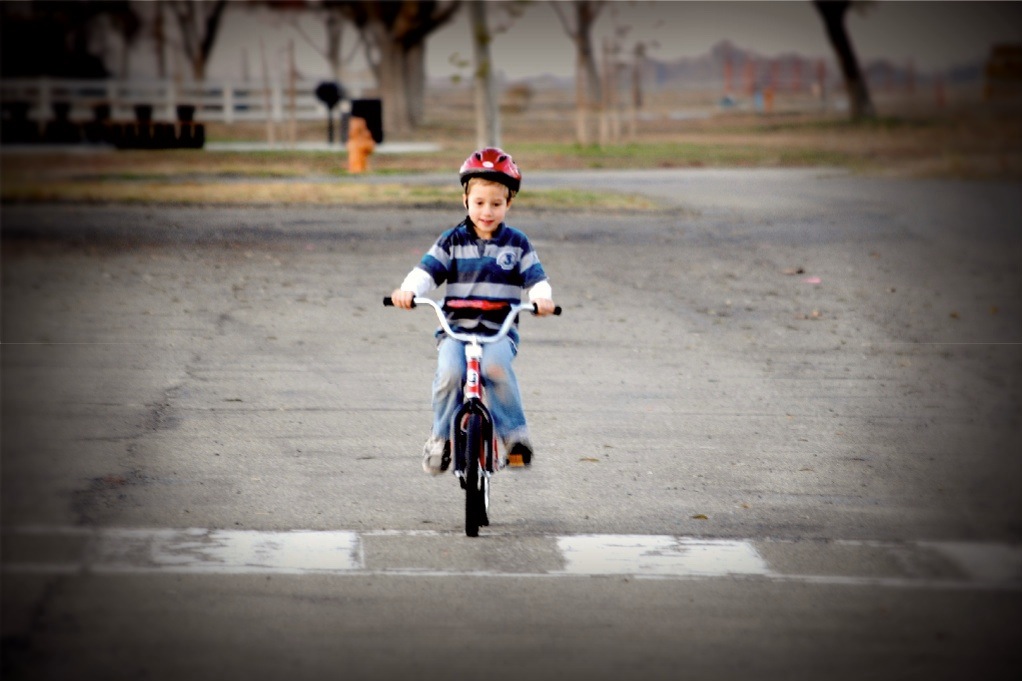
Mom really loves it when he bike rides, too. Not only is it a great aerobic and general mobility activity, it is wonderful for vestibular (balance) stimulation and is also a cross-pattern activity, using both the left and right sides to peddle and steer simultaneously, strengthening the corpus callosum and general brain function.

Plus? It is just plain, good old-fashioned fun.


Physical Excellence Friday

"Thou liftest me up to the wind; thou causest me to ride upon it, and dissolvest my substance." 

Job 30:22


Hunter is 5 years, 8 months old

Friday, November 12, 2010

Brachiation Joy (Physical Excellence Friday)


Hunter loves brachiating.

Back and forth. Back and forth. Back and forth.

He could do this all day.

Too bad right now he can only do it at the park. But we're working on that, hopefully by Christmas, we will finally have one (a brachiation ladder) in our house again.

Because it's not only a really, really good upper body exercise. The cross pattern motion is good for your brain, too.


Physical Excellence Friday

"Therefore now let your hands be strengthened, and be ye valiant..." 
2 Samuel 2:7
Hunter is 5 years, 7 months old

Wednesday, October 20, 2010

No Comment: Scoring First Soccer Goal


"...forgetting those things which are behind, and reaching forth unto those things which are before, I press toward the mark for the prize of the high calling of God in Christ Jesus." 
Philippians 3:13-1
Hunter is 5 years, 7 months old 

Friday, August 27, 2010

Physical Excellence Friday: Water Rescue

"Our definition of Physical Excellence includes being able to solve any physical problem encountered during life. This may include saving one's own life, or saving someone else's.
-Douglas Doman, How to Teach Your Baby to Swim
Our swimming goals for this summer didn't used to include water rescue skills, except maybe self-rescue.

But it just sort of came up in the course of our swimming adventures. A lot of what-if's.

Here are some of the beginning water-rescue skills we have been working on:

  • Throw, Don't Jump  The first thing we talked about was the use of the life preserver and other items available to throw out for someone who is drowning or distressed in the water. We talked about why it is dangerous to jump in for someone who is distressed, because in their panic they can cause both of you to drown. 
  • Practice Throwing Assist  We brainstormed different things that could be thrown out to a distressed person to pull them in, including the life preserver with rope, the looped pole (stored near life preserver), and some other unconventional things, such as an out stretched towel or a hose. We also practiced why it is important to kneel or lay down when using a throwing assist, so you don't get pulled in, and to be very careful to throw the item near, not on, the person, so as to not knock them unconscious or cause more damage.
  • Calling 911 No practice calls here, but we have talked about how to get help, specifically calling 911, and the Check-Call-Care procedure of checking the person, calling 911, then caring for them until more help arrives.

In another post I will talk about water safety and Douglas Doman's recommendations for things to teach your tiny child.

We are going to start talking about rescue breathing, CPR, and other first aid procedures from my American Red Cross manual. 

I figure, it's important to learn now. Because you're never too young to learn, and the younger and more frequently you learn something, the more it sticks. 

The more it becomes internal, permanent, and automatic.

And because kids are always full of surprises. So they may just one day surprise us with being a lot more capable than we give them credit for.

Physical Excellence Friday
"He delivereth and rescueth, and he worketh signs and wonders in heaven and in earth, who hath delivered Daniel from the power of the lions." 
Daniel 6:27
Hunter is 5 years, 5 months old

Friday, July 23, 2010

Sunny-Side Up in the Water: Learning How to Float


Yay for back floating!

Surprisingly Hunter was unable to do this until recently. I have seen people teach little babies how to float on their backs as a life-saving technique if they were ever to fall in the water. I'm not sure how they did it though. Hunter was first introduced to back-floating in his brief YMCA swimming class when he was two. But for the life of me I have not been able to get him to do it until this summer.

He hated it!

He actually did this for the first time during our long Fourth of July weekend camping. We had been practicing a little bit most every time we swam, and he finally built up the confidence (and balance) to independently defy gravity (well, sort of).

I have now started a new technique.

Instead of helping him by lifting him up to his back and then gently releasing him to float, I have been, well, not helping him. I usually throw him in and have him flip over and kick up his legs himself. He even ends up getting a little water splashed in his face or moving waves sent his way while trying to stay relaxed. (I'm lovely, I know)

But in the end my playful antics have helped him become a better floater and, more importantly, he has learned to use this technique to rest and relax despite the circumstances. Because I think that, even more than a wonderful exercise in balance, full body control, and as a result of that - brain development - that it is good to be able to rest and stay calm while mid water. You know, just in case.

His current time floating: two minutes. It was originally thirty seconds at a time.

I hope to be able to work up to five minutes straight by the end of the summer. But either way, we'll see. We're just having fun and learning something in the process, as always.

"Now therefore be not grieved... for God did send me before you to preserve life." 
Genesis 45:5
Hunter is 5 years, 4 months old

Monday, July 12, 2010

Head First: Diving and Streamlining

Step 1: Position feet so they are flat on the wall, knees together, bottom near edge and hands together above head

Step 2: Lean forward and dive out (not down), attempting to get hands and head in water first (not belly, which is kind of what he did in this picture). Push off wall with feet.

Step 3: Keep straight and kick with flutter kick (kicking from the hips and keeping legs straight, in small, quick kicks, not kicking from knees)

Continue to kick straight forward as far as possible until needing to come up for air

Dive. Kick. Swim.

Nothing really new (except the fact that he has gotten much more graceful at it) as I did these exercises with him since that lovely fall of 2007 when we managed to get to the local YMCA's pool once a week or so. (Hunter, at the time, was two).

But in our new swimming journey (in which Hunter has made his way above the water and made the adventure a lot more exciting) diving and streamlining has suddenly begun to take a key role in refining his swimming technique and improving his form, endurance, and confidence.

The benefits I have suddenly realized from this activity:
  1. Helping him learn to keep his body straight and parallel with pool floor
  2. Helping him learn the flutter kick (which is hard for him, he always wants to kick from the knees) by isolating it and being in a relaxed position
  3. Improving his ability to hold his breath as he tries to get as far as he can before coming up for air

Convenient how these benefits perfectly line up with one of our big end-of-summer goals: learning the crawl stroke.

Which I only realized recently, what a nice activity this is. And so much more than learning how to dive.

Yay for those great realizations.

"Lead me, O LORD, in thy righteousness... make thy way straight before my face."
Psalm 5:8
Hunter is 5 years, 3 months old

Saturday, July 10, 2010

Physical Excellence: A Day's Hike in the Mountains

"Our hope is for them to be participants in life, not spectators. Our definition of Physical Excellence includes being able to solve any physical problem encountered during life. This may include saving one's own life, or saving someone else's. Physical Excellence should also help children expand their intellectual and social horizons. At The Institutes, our formula is: Physical Excellence = The Ideal Environment + Maximum Opportunity.
Glenn Doman

"LORD, by thy favour thou hast made my mountain to stand strong..." 
Psalm 30:7
Hunter is 5 years, 3 months old

Thursday, July 1, 2010

Champion


"And as he talked with them, behold, there came up the champion..."
1 Samuel 17:23
Hunter is 5 years, 3 months old